
Apartment viewing checklist: what to check and how to keep useful notes
Prepare your requirements, follow a clear viewing route and separate observations from unconfirmed answers. Includes a note template and a worked comparison of two apartments.
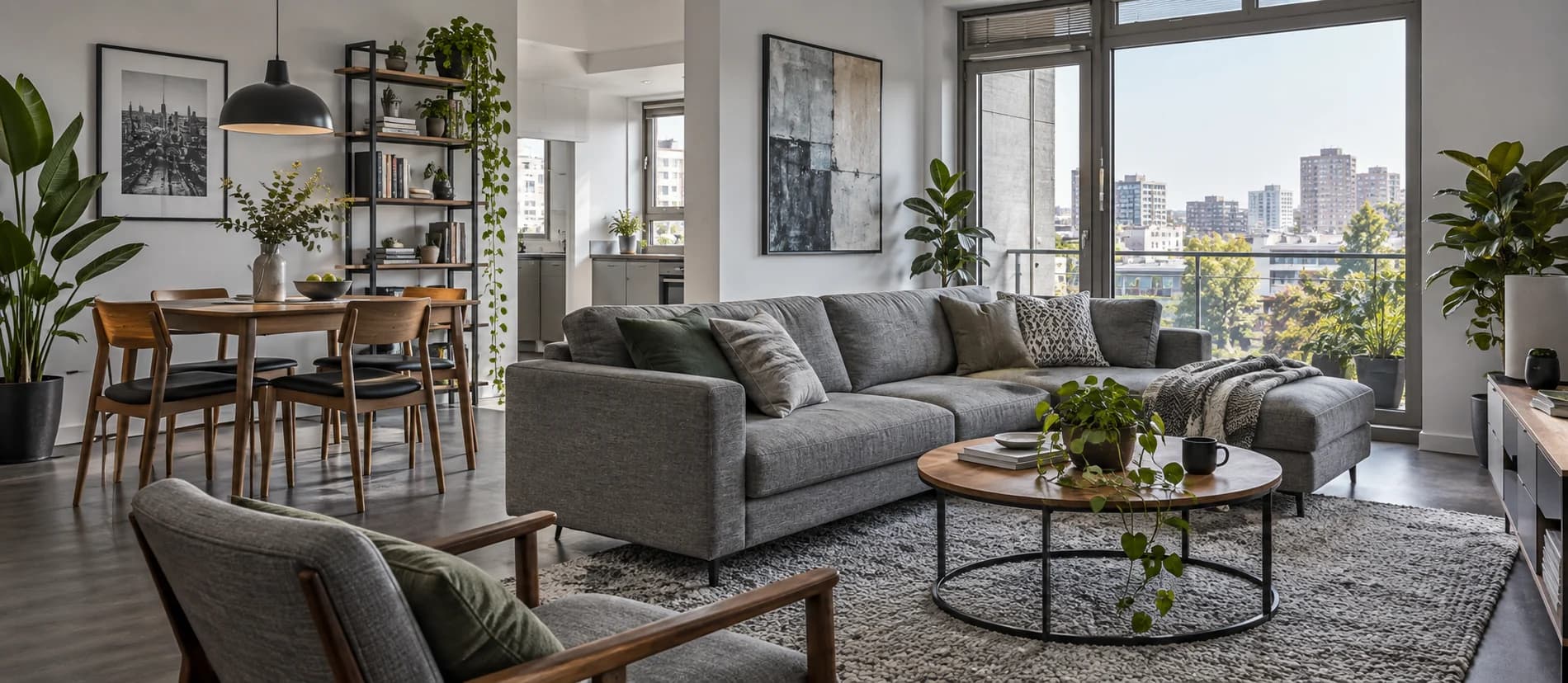
A useful apartment viewing should leave you with three things: a clear record of what you saw, a list of answers still needed and a reason to continue or stop considering that home. Trying to remember every detail is less useful than using the same short form for each visit.
Start with your own requirements, follow a consistent route through the building and apartment, and separate observations from what somebody tells you. You can then compare properties without confusing a good first impression with a checked fact. This guide proposes a practical method for organising a visit; it does not provide a technical inspection, valuation or legal assessment.
Decide what the home must do for you
Before making appointments, write down three essential requirements and three preferences. An essential requirement should be concrete enough to verify. “A separate room for work” is clearer than “a comfortable layout”. “The pushchair can reach the apartment without being carried” is clearer than “good access”.
Include everyone who will live there in this discussion. If two people have incompatible expectations, resolve them before rating a property. A flat should not receive a high score simply because one person likes the kitchen while the other's essential requirement remains untested.
Keep preferences separate. A wall colour or a particular furniture style may be less important to you than the arrangement of rooms. Decide that in advance instead of rewriting your priorities after an attractive viewing. Bring a tape measure, your essential furniture dimensions, a charged phone and the saved listing.
Confirm which property you are visiting
Ask for the exact address, entrance, floor and apartment identification, together with the contact person's name. Save the listing link and advertised details with the appointment. If the meeting point differs from the advertised location, clarify the actual property before setting off.
For address questions, RGZ's Address Register records street names and house numbers in Serbia. RGZ explains the register. Use the identifying information consistently in your notes so that photographs and follow-up questions cannot be confused with another apartment.
RGZ also describes eKatastar as a way to search registered property information by address or cadastral parcel. Official eKatastar description. It can provide a starting point for collecting information. Do not treat your own search or a screenshot supplied at a viewing as the end of professional document review. If identifiers or descriptions differ, record the discrepancy and ask for clarification; this guide does not decide its legal meaning.
Begin with the route to the front door
Walk the route you would actually use with shopping, luggage or a child. Note steps, doors, passage widths and where a bicycle or pushchair would have to pass. Ask before entering locked common areas. If you need lift access, establish what you were able to see during the visit and what remains unconfirmed.
Observe the entrance, corridor and immediate surroundings without guessing why they look that way. “A box blocks part of the landing” describes the visit. “The building is badly managed” is a much broader conclusion and needs more evidence.
Ask who can answer questions about shared facilities and current work in the building. Write down any promised documents or contacts. An explanation given in conversation belongs in your notes, but should remain labelled as an explanation until you check it.
Check the layout with your own furniture
Follow the same sequence each time: entrance, living area, kitchen, bedrooms, bathroom and any outside space. In every room, consider access, everyday use and the furniture you intend to keep. Measure the dimensions that decide whether an essential requirement is possible.
For a desk, check the proposed position and the space needed to pull out the chair. For a bed, consider access from the doorway and room to open existing wardrobes. Note what you actually measured; do not fill missing dimensions from a wide-angle photograph.
Ask which fittings, appliances and furniture are included. A photographed item is not an answer to that question. Make a separate list of what was discussed so that a later comparison does not assume two homes come with the same equipment.
Describe light, sound and condition precisely
Record the date, approximate time, weather and which rooms had artificial lights on. Look at the places where you expect to read or work. If daylight matters to your decision, a second visit at a different time may answer a question the first visit cannot.
Pause in the rooms that would be used for sleeping or work and describe the sound you hear. “Traffic audible beside the open bedroom window during this visit” is useful. “Always noisy” is not established by one observation. Ask permission before opening windows or operating anything.
For marks, odours, damaged finishes or sticking doors, note the location and appearance. With permission, take an identifying photograph and a close view. Avoid guessing the cause, repair cost or seriousness. Do not open electrical panels, dismantle fittings or test unfamiliar heating equipment. Put technical questions on a separate list for the appropriate professional.
Ask for concrete information about everyday use
Ask how the current occupants use heating and cooling, which utilities are billed separately and which charges are shared. Request dated examples with personal information removed where possible. A verbal monthly amount should be recorded as an unverified statement, including the period it supposedly covers.
Differentiate “not shown” from “not available”. If the latest bill or equipment record is not present, record who will provide it and when. Do not convert a partial set of answers into a precise monthly budget or a renovation estimate.
Also clarify practical arrangements: access for another viewing, what can be measured, who can answer outstanding questions and what changes before handover are being proposed. These are requests for information, not acceptance of contractual terms.
Use a note format that preserves uncertainty
Create one entry per apartment with the same fields:
- Property identification, listing link and visit date.
- Essential requirements: checked, not met or still unknown.
- Observations, with room names and measurements.
- Statements made by the agent or owner, with the speaker identified.
- Documents or photographs actually received.
- Open questions, the person expected to answer and the next step.
Use ordinary labels instead of one overall score. “Measured”, “said”, “document received” and “not checked” communicate more than a row of stars. An unknown is not a negative finding, but it is not evidence in favour of a property either.
Ask permission for photographs and focus on the property rather than personal belongings. Name the files with the room and visit identifier. A close-up without context is difficult to interpret later; pair it with a wider view when permission and circumstances allow.
A worked comparison of two fictional apartments
Imagine Ana and Milan need a separate work room and space for a dining table they already own. The following example is invented to show the method; it describes no real listing or market price.
In apartment A, they measure the proposed work room and their desk position works. The dining area also fits their table. They hear traffic during the visit, but have not visited in the evening. The owner describes heating expenses, without showing bills. Their notes therefore contain two confirmed layout observations, one sound observation and two unanswered questions.
Apartment B looks brighter at its viewing. However, Ana and Milan have not measured the smaller room, which the agent calls suitable for work. Bills have been shown, but they need to read the dates and see which charges are included. Calling B “better” at this point would hide the unfinished checks.
Their next actions are specific: arrange a different-time visit to A and request its bills; measure B's work room and review the documents already provided. They can then compare answers against their original requirements. The method does not select the apartment for them or guarantee that either is suitable.
Finish each visit before starting the next comparison
As soon as practical, complete the notes while the details are fresh. Each person should first write their own essential positives and concerns, then compare observations. This makes it easier to notice a question that one person missed.
Send one concise follow-up list, referring to the correct apartment and the relevant room or document. Keep replies beside the original note. If an answer changes your understanding, update the entry while retaining what was initially uncertain.
Before proceeding, review which essential requirements are confirmed, which are not met and which still need checking. Use a second viewing to resolve specific gaps. Take document interpretation and technical concerns to suitably qualified advisers. The immediate goal is a well-informed next step, supported by an orderly record rather than an impression you can no longer explain.