

How to compare neighbourhoods against your everyday routine
Compare specific addresses through commuting, shopping, access to services and personal priorities. A practical note template and fictional example help separate facts from first impressions.
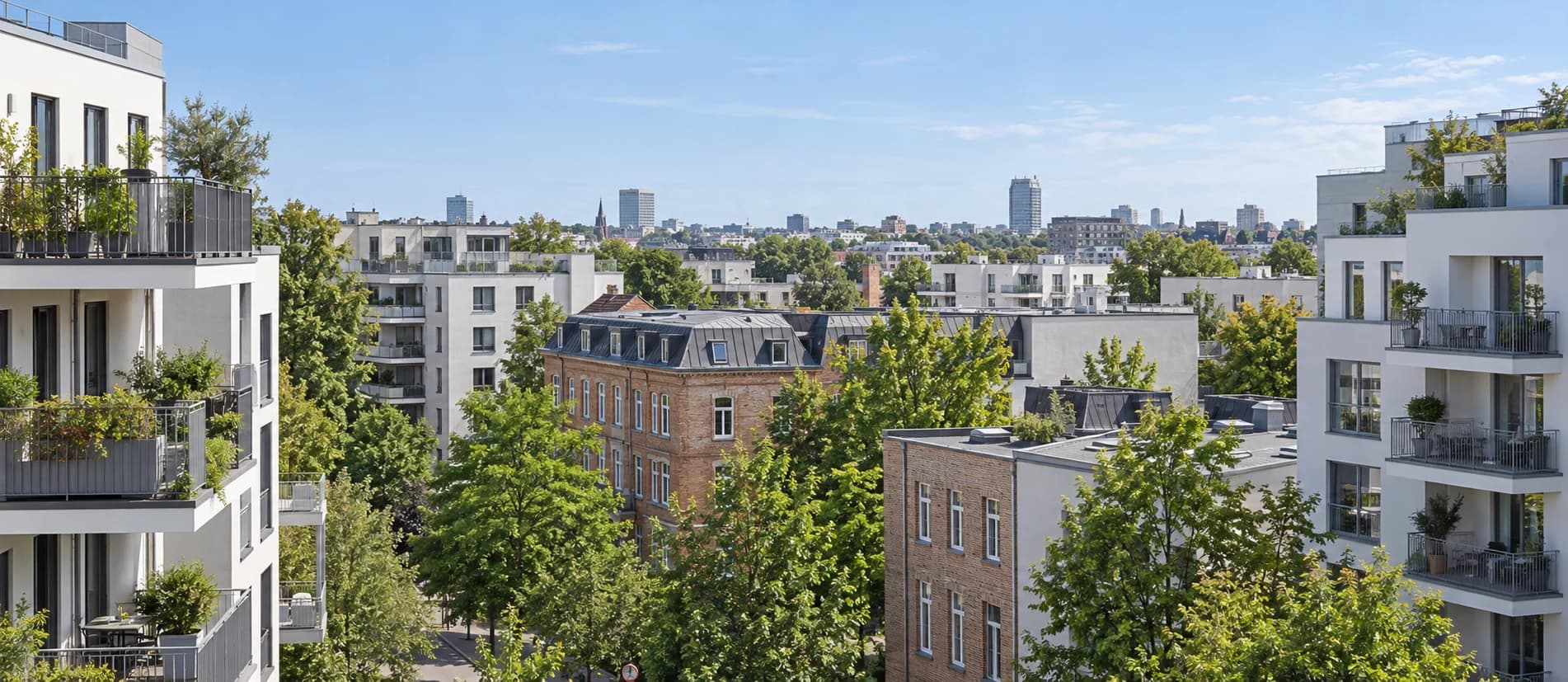
A neighbourhood that works for a daily commuter may not suit someone who works from home or a household whose routine revolves around nursery and school. Start with your ordinary week rather than phrases such as “excellent location”. The aim is to collect comparable information for two or three specific addresses and understand the everyday compromises each would involve.
This guide offers an original visiting method, a note template and a fictional comparison. It does not rank actual neighbourhoods, forecast prices or turn a short visit into a judgement about local safety. A useful result can also be a clearly written question that you still need to answer.
1. Describe a normal weekday before opening a map
Write down where you need to be, at what time and how often. Include work, school, shopping, regular commitments and people you frequently visit. Separate daily journeys from occasional ones: a destination you visit once a month should not automatically carry the same weight as a route you travel ten times a week.
Then choose three requirements without which the location would not work. Examples include a commute without changing services, step-free access to the entrance or being able to buy essentials on foot. List preferences separately, such as cafés, a particular view or a favourite restaurant nearby. An attractive extra does not resolve an unmet essential requirement.
If you are choosing a home together, each person should first write down their own needs. This reveals differences before somebody declares an area ideal. Agree on what “close” means too: an acceptable journey time, a way of travelling and a specific destination, rather than one word that means different things to different people.
2. Compare exact addresses and the entrances you will use
A neighbourhood name covers too much ground to test everyday journeys. Two buildings in the same area may have different access to a stop, shop or main road. Ask for the exact address and establish which entrance you would use. If a listing provides only an approximate location, mark the comparison as provisional.
Serbia’s Republic Geodetic Authority, RGZ, describes the Address Register as containing street names and house numbers for settlements across Serbia, with data also available through GeoSrbija. It can help establish the address; it does not rate everyday living conditions. RGZ’s Address Register description.
On your own map, mark the entrance, destination and a route you can actually follow. Do not assume that a courtyard passage is open or that a park has an entrance on every side. An unconfirmed shortcut remains a question for the visit.
3. Time the whole journey from door to door
Try your most important journey at a time that matches your routine. Record leaving the building, walking to the stop, waiting, travelling, changing services and the final walk. If you drive, include finding a parking space and getting from the parked car to the destination. Compare more than the minutes spent inside a vehicle.
For Belgrade, the Secretariat for Public Transport website has sections for routes, stops, timetables and service changes. Check the relevant information shortly before your trial journey. In another city, use its responsible local source. Belgrade Secretariat for Public Transport.
One successful arrival is not a promise of the same journey time every day. Record the date, day, direction and circumstances alongside the time. If you tested the route during a holiday or outside your normal travelling hours, do not describe it as a test of a working morning. Repeat the most important journey before making your final choice.
4. Check everyday shopping and access to services
Walk to the shop you would actually use, rather than simply the closest symbol on a map. Check whether its entrance, everyday range and posted opening hours work for you. Do the same for a pharmacy, post office or another destination that matters to your household.
A nearby nursery, school or healthcare building does not establish that your household can use the service it needs. Confirm availability, application requirements and your specific needs directly with the institution. Keep “the building is nearby” separate from “access to the service is confirmed” in your notes.
Consider the sequence of your tasks as well. A slightly more distant shop on your way home may suit you better than a closer one requiring a separate trip. Sketch an ordinary chain of journeys: work, shopping, collecting a child, home. This describes your own routine rather than a universal score for the neighbourhood.
5. Walk at the pace of the person who will live there
Follow an important pedestrian route at your realistic pace. Note steps, gradients, gaps in the pavement, crossings and places where you need to change direction. If you use a wheelchair, pushchair or walking stick, or carry small children, check the actual route for your needs. Do not infer that the whole district is accessible from one usable section.
Look at the small practical details too: where you would put a bicycle, how you would arrive carrying shopping, whether the route reaches the correct entrance and what the final few metres involve. For parking, observe conditions when you would normally return. An empty space during a visit is not a reserved space for a future resident.
Avoid photographing passers-by or the interiors of other people’s homes for your notes. A route description and pictures of relevant obstacles without personal details are enough. If a check would involve entering a closed or private area, ask for permission first.
6. Visit at different times and keep unknowns visible
Use the first visit to get your bearings and the next to answer the question that matters most to your decision. That might be the morning journey, returning in the evening or quiet while working from home. Do not try to confirm every aspect of the area through one brief visit.
For noise, record what you heard, where it came from and how long it lasted during your visit. Distinguish an isolated event from something you have actually encountered more than once. An observation from the pavement is not a measurement of sound insulation inside an apartment. If noise is decisive, also visit the particular apartment at a relevant time.
Apply the same care to lighting and your personal experience of walking around. Describe concrete conditions, but do not invent a crime rating or declare an area safe from people’s appearance, rumours or one walk. Keep claims about a future park, road or other project separate from facilities that exist today.
7. Use the same note template for every address
Create a separate record for each location and complete the same fields. Short, checkable statements are more useful than an overall score that you cannot explain later.
- Address and exact entrance: confirmed or approximate.
- Date, time and conditions of the visit.
- Most important journey: destination, transport mode and door-to-door time.
- Walking route: obstacles, crossings and an alternative route.
- Essential services: what exists and what has been directly confirmed.
- Personal requirements: meets them, does not meet them or not checked.
- Open question and the next specific action.
For each important statement, identify its origin: your own observation, official information or somebody else’s answer. Do not give an unknown item an average score. If you have a morning trial journey for one address and only a map estimate for another, the comparison is not yet on equal terms.
8. An example: one resident, two different compromises
The following example is fictional; addresses A and B do not represent actual listings or neighbourhoods. Jelena works in an office three days a week, often shops on foot and wants a commute without changing services. Both apartments satisfy the requirements she has already set for the home itself.
From address A she records 32 minutes to the office on a Tuesday morning, without changing services. The shop is on her route home. From address B she records 26 minutes, but with one change. She prefers the walking space near B. These are imagined notes belonging to one person, not market data.
Because Jelena identified a journey without changes as essential beforehand, the shorter time at B does not by itself resolve the mismatch. She can keep that requirement or consciously reconsider it, but should not silently discard it because of a pleasing first impression. Before deciding, she checks the return journey for A and repeats the morning route.
Someone who works from home could rank the same options differently. The value of the template is that it makes the reason for the choice clear. Once facts, preferences and unknowns are separated, the next visit becomes a focused check of important questions rather than another walk without a clear purpose.
Sources checked on 30 September 2026. The comparison method and fictional example are original editorial suggestions, not an official ranking or a field study of neighbourhoods.